

Table of Contents
- Introduction: The Border Emergency
- Fact 1: A Legal Loophole Triggered the Chaos
- Fact 2: The Deadly Human Toll and Demographics
- Fact 3: The Swift and Coordinated Bilateral Crackdown
- Fact 4: The Urgent European Union Intervention
- Fact 5: The Underlying Geopolitical Anomaly
- External Analysis: The Role of Digital Smuggling Networks
- Conclusion: The Inevitable Need for Strategic Reform
The Border Emergency
The Ceuta migration crisis has rapidly evolved into one of the most pressing geopolitical and humanitarian emergencies of the year. In late July 2026, the borders separating northern Morocco and the Spanish-controlled enclave of Ceuta (known as Sebta in Morocco) witnessed an unprecedented breakdown of order.
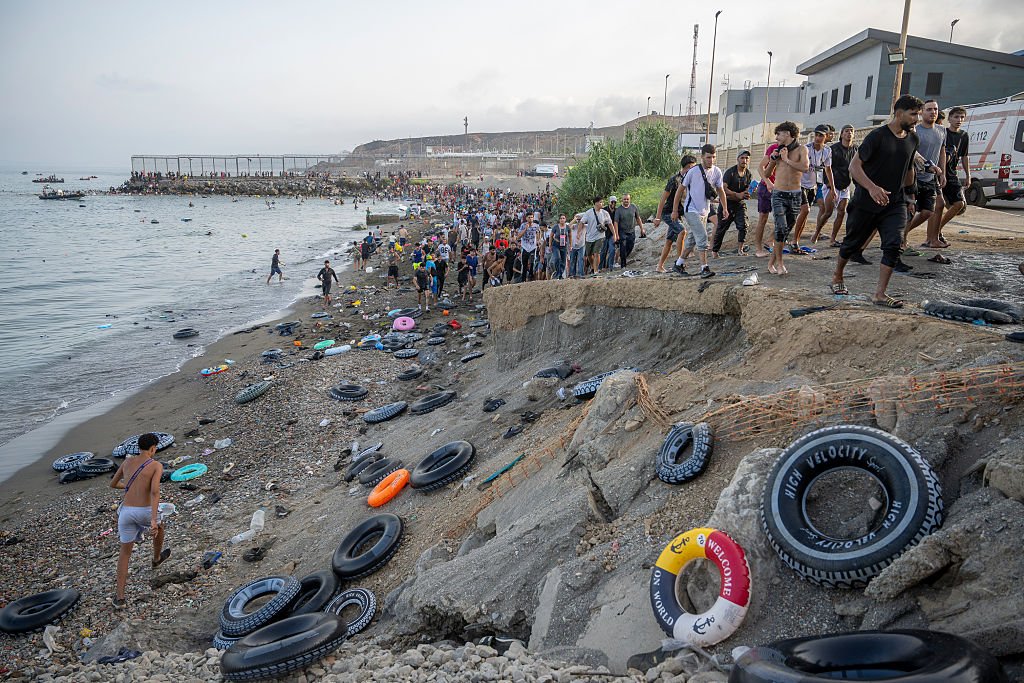
Driven by misinformation and desperation, thousands of individuals attempted to bypass fortified border fences by throwing themselves into the dangerous currents of the Mediterranean Sea. The resulting Ceuta migration crisis is not merely a localized border skirmish; it is a profound reflection of complex legal loopholes, aggressive human smuggling tactics, and the enduring geographical anomalies of the African continent.
In this comprehensive, long-form analysis for Nabil IT [Internal Link: Explore our Business & Finance category for more macroeconomic insights], we will deconstruct the exact timeline of this disaster. By examining five devastating facts grounded in recent intelligence, we aim to provide policymakers, border security analysts, and human rights observers with a clear understanding of what triggered the massive influx, how the European Union responded, and what the future holds for this highly contested geopolitical chokepoint.
[Image Placeholder: A wide-angle aerial shot showing thousands of people gathered near the border fence at the beach of Fnideq] Image Alt Text: The chaotic start of the Ceuta migration crisis
Fact 1: A Legal Loophole Triggered the Chaos
To understand the sudden explosion of the Ceuta migration crisis, one must look at the judicial decisions that inadvertently armed human smuggling networks with powerful misinformation. The catalyst for this specific wave was not sudden political instability, but rather a ruling by the highest court in Spain.
The Supreme Court Ruling of July 8, 2026
On July 8, 2026, Section V of the Administrative Litigation Chamber of the Spanish Supreme Court issued a highly consequential ruling. The court determined that the practice of “devoluciones en caliente” (immediate, on-the-spot pushbacks or deportations) could no longer be legally applied to migrants who successfully arrived on Spanish territory by sea or by swimming.
According to this judicial mandate, any individual intercepted in the water or arriving by swimming must be subjected to an individualized administrative identification procedure, expressly forbidding their immediate expulsion without phttps://nabil-it.com/wp-content/uploads/2024/12/vintage-electrical-and-electronic-appliances-in-an-2023-11-27-05-10-10-utc-e1734923695564.jpgr legal examination. While immediate pushbacks still apply to those breaching physical barriers like fences, the maritime route was legally differentiated.
The Weaponization of the Verdict
This legal nuance was quickly seized upon by human trafficking networks. Smugglers deliberately distorted the ruling, broadcasting a powerful and highly misleading message across social media platforms. They convinced thousands of potential migrants that reaching Ceuta by sea guaranteed immunity from immediate deportation, effectively portraying the dangerous swim as a guaranteed ticket to European residency. This weaponization of legal information transformed a dry court document into the direct catalyst for a massive human stampede.
Fact 2: The Deadly Human Toll and Demographics
The Ceuta migration crisis is, at its core, a severe human tragedy. The false promises peddled by traffickers led thousands to risk their lives in treacherous waters.
The Demographics of the Migrants
The sudden convergence of individuals on the beaches of the Moroccan town of Fnideq—the closest point to Ceuta—was staggering. An estimated 2,000 individuals managed to make the dangerous swim toward the enclave. Security intelligence provides a clear breakdown of the demographics involved in this massive wave:
- Algerian Nationals (60%): The clear majority of the migrants were Algerian citizens who had been waiting in the region for an opportunity to cross.
- Moroccan Nationals (35%): Primarily young individuals lured by the false rumors of immediate legalization and impunity.
- Sub-Saharan Nationals (5%): A smaller fraction consisted of migrants from vahttps://nabil-it.com/wp-content/uploads/2024/12/vintage-electrical-and-electronic-appliances-in-an-2023-11-27-05-10-10-utc-e1734923695564.jpgus Sub-Saharan African nations.
The Tragedy in the Waters
The swim from Fnideq to Ceuta is notohttps://nabil-it.com/wp-content/uploads/2024/12/vintage-electrical-and-electronic-appliances-in-an-2023-11-27-05-10-10-utc-e1734923695564.jpgusly perilous, characterized by powerful maritime currents and dangerous turbulence along the breakwaters. The cost of this desperate journey was devastating. Official reports confirmed multiple fatalities, with the death toll ranging between four and nine recovered bodies, alongside dozens of individuals reported missing and many more suffering severe injuries. The crisis stretched local emergency services to their absolute limits as they transitioned from border control to maritime search and rescue.
[Video Placeholder: News footage detailing the maritime rescue operations during the Ceuta migration crisis]
Fact 3: The Swift and Coordinated Bilateral Crackdown
In stark contrast to previous diplomatic standoffs, the response to the 2026 Ceuta migration crisis demonstrated a remarkably high level of coordination between the governments of Morocco and Spain.
The Repatriation Agreement
Faced with overwhelming numbers, authorities in Rabat and Madrid bypassed prolonged diplomatic negotiations and instantly implemented a comprehensive repatriation protocol. The two governments reached a firm agreement to systematically and rapidly return all individuals who had entered the enclave illegally during the surge.
The Spanish Ministry of the Intehttps://nabil-it.com/wp-content/uploads/2024/12/vintage-electrical-and-electronic-appliances-in-an-2023-11-27-05-10-10-utc-e1734923695564.jpgr publicly praised the “exemplary cooperation” of the Moroccan security forces, acknowledging that Moroccan authorities had successfully thwarted thousands of additional crossing attempts upstream before they could reach the water. To reinforce the severity of the crackdown, both nations announced that those apprehended would face strict judicial proceedings, including detention and prison sentences for illegal border crossing and acts of violence against security personnel.
The Dilemma of Unaccompanied Minors
Despite the sweeping repatriation agreement, a significant legal hurdle remains regarding the treatment of minors. Spanish law explicitly prohibits the deportation of unaccompanied minors without stringent protective guarantees and administrative reviews.
This legal safeguard is deeply entrenched; in 2022, the Supehttps://nabil-it.com/wp-content/uploads/2024/12/vintage-electrical-and-electronic-appliances-in-an-2023-11-27-05-10-10-utc-e1734923695564.jpgr Court of Andalusia upheld a ruling that suspended the collective expulsion of nearly 2,000 minors who had arrived during a previous crisis in 2021. Resolving the fate of the minors involved in this latest wave remains one of the most complex challenges for Spanish authorities.
Fact 4: The Urgent European Union Intervention
The Ceuta migration crisis did not remain a localized bilateral issue; it quickly commanded the attention of the highest echelons of the European Union in Brussels.
Von der Leyen’s Condemnation
Ursula von der Leyen, the President of the European Commission, took to the social media platform X to express her deep concern, firmly qualifying the images emerging from the Bab Sebta crossing as “unacceptable”. She reiterated a hardline stance on European sovereignty, stating, “We cannot allow anyone to come into our Union without complying with our rules”. Furthermore, she demanded the immediate cessation of dangerous crossings, the total dismantling of smuggling networks, and the swift return of irregular migrants in strict accordance with the EU’s legal framework.
Mobilizing the Commissioners
To back up these strong words with operational support, Brussels mobilized two key European Commissioners.
- Magnus Brunner: The Commissioner for Home Affairs and Migration was tasked with providing direct operational support to Spain. He explored reinforcing border control through the deployment of Frontex, the European Border and Coast Guard Agency.
- Dubravka Šuica: On the diplomatic front, Commissioner Šuica was instructed to establish immediate contact with Moroccan Foreign Minister Nasser Bourita. The European Commission expressed confidence that the strategic partnership between the EU and Morocco would stabilize the highly tense situation.
[External DoFollow Link: For more detailed information on EU border policies, visit the official Frontex website at https://www.frontex.europa.eu/]
Fact 5: The Underlying Geopolitical Anomaly
While immediate law enforcement and diplomatic interventions managed to quell the initial surge of the Ceuta migration crisis, geopolitical analysts emphasize that the root cause of the instability remains unaddressed. The very existence of Ceuta (Sebta) and Melilla as Spanish enclaves in North Africa is increasingly viewed as an unsustainable geographical and political anomaly.
The Burden of Defense
Geographically, Ceuta and Melilla are separated from the rest of Morocco by nothing more than a simple wire fence and a narrow stretch of water that can be crossed with swimming fins and an inner tube. Maintaining these European outposts on the African continent requires an exhausting, year-round security effort. The financial, human, and logistical costs of heavily militarizing these borders place a massive and continuous burden on the state budgets of both Spain and Morocco.
The Inevitability of Restitution
According to deep geopolitical analysis, the territorial and demographic realities of the 21st century make the current status quo ultimately untenable. Ceuta is an African city, deeply dependent on its immediate Moroccan environment, and surrounded by an overwhelmingly Arab-Muslim demographic.
Unlike the historical, centuries-long integration of Arab-Muslim culture within the Iberian Peninsula, these enclaves are viewed by many analysts as mere relics of a bygone colonial era that generate nothing but continuous security friction. Consequently, the eventual restitution of Ceuta and Melilla to Moroccan sovereignty is increasingly seen not as a question of if, but when. The true tragedy lies in how many more human lives will be lost in the waters before this historical anomaly is finally resolved.
(Notice to the reader: The following section contains macroeconomic and technological analysis that expands beyond the immediate news reports to provide a broader context for the Ceuta migration crisis. You may want to independently verify this data regarding global border technology).
External Analysis: The Role of Digital Smuggling Networks
The scale of the Ceuta migration crisis perfectly illustrates how digital transformation has completely altered the landscape of human smuggling. We can no longer view border control merely as a physical challenge involving fences and coast guards; it is now an information war.
Social Media as a Catalyst
Human traffickers have evolved into sophisticated digital marketers. By utilizing platforms like TikTok, Telegram, and Facebook, smugglers can instantly broadcast highly edited, deceptive videos showcasing migrants “successfully” reaching European shores. When the Spanish Supreme Court issued its ruling on maritime returns, these digital networks intercepted the legal jargon, simplified it into an attractive (and false) promise of amnesty, and targeted thousands of vulnerable youths in Algeria and Morocco via encrypted algorithms.
Advanced Border Technology Requirements
To prevent the next iteration of the Ceuta migration crisis, the European Union and Morocco must invest heavily in predictive border technologies.
- AI-Driven Social Media Monitoring: Security agencies must deploy artificial intelligence to scan open-source social media networks to detect “calls to action” by smugglers days before a physical gathering occurs at the border.
- Drone Swarm Surveillance: Traditional coast guard vessels are too slow to intercept thousands of swimmers simultaneously. The deployment of autonomous aerial drones equipped with thermal imaging can detect swimmers entering the water at night, allowing for immediate, localized interception before they reach dangerous open currents.
- Biometric Rapid Processing: To handle the legal complexities of minors and immediate deportations, border facilities require advanced biometric processing units capable of instantly identifying repeat crossers and matching them with national databases to expedite the administrative procedures mandated by the courts.
[Internal Link: Read our in-depth review of the latest AI tools transforming digital security protocols]
Conclusion: The Inevitable Need for Strategic Reform
The Ceuta migration crisis of July 2026 will be recorded as a critical inflection point in Mediterranean geopolitics. It exposed the extreme vulnerability of physical borders to digital misinformation and highlighted the devastating human cost when legal loopholes are exploited by organized crime.
While the swift, unified response from the governments of Morocco and Spain, backed by the European Union, successfully prevented the total collapse of the border, these measures are merely reactive. Treating the symptoms of the crisis with tear gas, naval interceptions, and rapid deportations will not cure the underlying disease.
As long as the structural anomalies of the Ceuta and Melilla enclaves persist, and as long as the stark economic disparities between Europe and Africa remain, the pressure on these borders will never truly subside. Preventing the next catastrophic Ceuta migration crisis requires more than just higher fences; it demands a fundamental reevaluation of territorial sovereignty, massive investments in predictive security technology, and comprehensive legal reforms that close the loopholes exploited by those who deal in human lives.
📦 KEY TAKEAWAYS FOR POLICYMAKERS
- Misinformation is Deadly: The crisis was directly triggered by smugglers weaponizing a Spanish Supreme Court ruling to falsely promise immunity for maritime crossings.
- A Multinational Emergency: The influx was dominated by Algerian nationals (60%), alongside Moroccans (35%), forcing a complex, multinational diplomatic response.
- EU Intervention is Mandatory: The crisis required immediate mobilization from the highest levels of the EU, proving that Ceuta is a European border vulnerability, not just a Spanish one.
- The Geopolitical Anomaly: The continuous human and financial cost of securing the enclaves reinforces arguments that their eventual restitution to Morocco is a geographical inevitability.
For more detailed reports on international policy, technology, and global markets, keep following Nabil IT.