

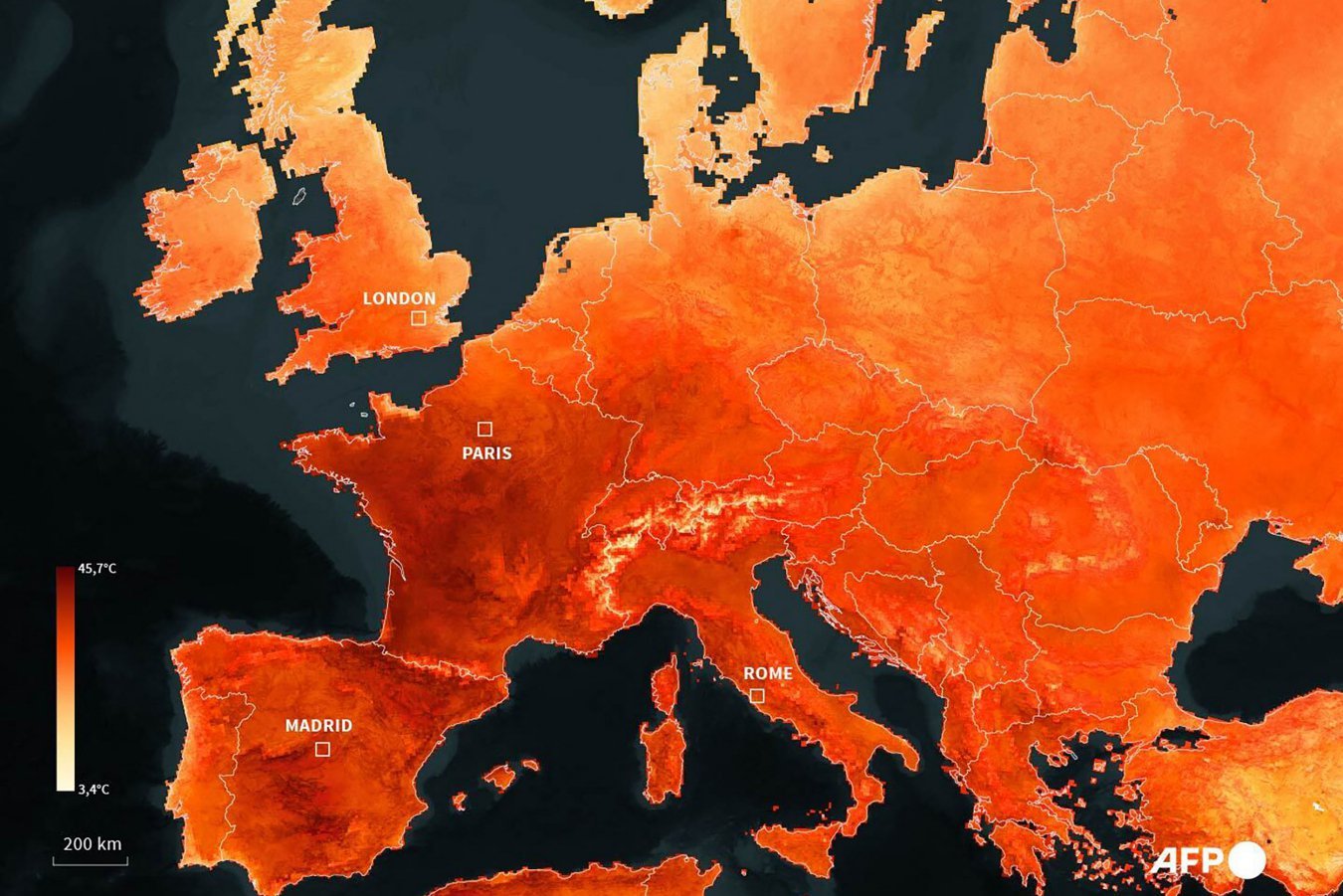
Throughout the summer of 2026, the European continent experienced an unprecedented series of compounding heatwaves, breaking historical temperature records from the Iberian Peninsula to Northern Europe.
With prolonged thermal domes pushing municipal temperatures above $45^\circ\text{C}$ across Southwestern Europe and threatening agricultural yields, energy grids, and public health infrastructure, European governments and the European Commission have enacted a wave of emergency climate adaptation policies.
Today on Nabil IT, we break down the climate mechanics behind the 2026 European heatwaves, examine the structural policy changes adopted by municipal and national authorities, evaluate urban cooling technology deployment, and provide a strategic analysis of Europe’s long-term climate resilience.
1. The Anatomy of the 2026 European Heat Anomaly
The severity of the 2026 summer heat crisis resulted from a stagnant atmospheric pressure block—commonly referred to as a “Heat Dome”—trapping dry Saharan air masses over continental Europe:
[ Saharan Ridge Extension ] ➔ [ Stagnant Atmospheric Heat Dome ] ➔ [ Extreme Surface Soil Aridity ]
                                                                             │
                                                                             ▼
                                                       [ Historic Heatwave & Fire Hazards ]
Key Drivers and Environmental Impacts:
- Urban Heat Island Escalation: Dense urban centers recorded night-time tropical temperatures exceeding $28^\circ\text{C}$, severely disrupting natural cooling cycles and straining municipal emergency medical networks.
- Hydrological and Agricultural Stress: Prolonged evaporation depleted river basins across major European waterways, restricting hydroelectric power generation and forcing reduced industrial cooling operations.
- Wildfire Acceleration: High winds paired with dried forest fuel loads triggered widespread wildfire outbreaks across Southwestern France, Spain, Portugal, and Greece, accelerating emergency response demands.
2. Emergency Policy Shift: From Reactive Relief to Structural Resilience
In response to repeated annual thermal extremes, European legislative bodies have transitioned from short-term emergency responses to binding Structural Climate Adaptation Directives:
| Policy Pillar | Mandated Action | Target Timeline | Primary Overseeing Bodies |
|---|---|---|---|
| Urban Heat Mitigation | Mandatory reflective roofs, permeable paving, and green canopy expansion | $2027\text{–}2030$ | Municipal Urban Planning Boards |
| Critical Grid Fortification | Substation thermal shielding and expanded localized battery storage | Immediate Execution | National Energy Regulatory Authorities |
| Workplace Heat Protection | Standardized legal thresholds for outdoor work stoppage during red alerts | Active 2026 Directive | European Labor Authority & Ministries |
| Agricultural Water Governance | Precision drip irrigation mandates and recycled water integration | Full Rollout by 2028 | European Environment Agency (EEA) |
3. Technological Adaptation: Satellite Telemetry and Smart Cities
Modern climate emergency policies rely heavily on real-time technology and urban sensing networks to protect vulnerable populations:
- High-Resolution Satellite Thermal Mapping: Space-based infrared imaging pinpoints micro-level urban hot spots in real time, allowing emergency services to deploy mobile cooling centers and medical units precisely where needed.
- Architectural Cool-Surface Coatings: Cities are applying high-albedo reflective coatings to roads and building tops, reducing surface absorption temperatures by up to $12^\circ\text{C}$.
- AI-Driven Power Load Balancing: Autonomous smart grid algorithms redistribute electrical loads during peak air conditioning usage, mitigating regional blackouts.
Strategic Analysis: Pros and Cons
Pros (Immediate Systemic Gains):
- Establishes enforceable, standardized safety protocols protecting outdoor workers and vulnerable demographics.
- Accelerates long-term public investment into green urban infrastructure and energy grid modernization.
- Improves regional cross-border cooperation through shared emergency response networks.
Cons (Implementation Challenges):
- High Initial Capital Expenses: Upgrading municipal infrastructure and building stocks imposes significant financial costs on local government budgets.
- Economic Slowdowns: Mandatory outdoor work halts during extreme heat events reduce seasonal output in construction and agriculture.
Final Verdict & Summary
The 2026 European Heatwave Crisis serves as a definitive turning point for global climate governance. By shifting from temporary emergency relief toward permanent urban adaptation, grid fortification, and legal worker protections, Europe is drafting the playbook for living in an era of climate volatility.
How is your city or region adapting to extreme summer temperatures and climate shifts? Share your perspectives in the comments below, and subscribe to Nabil IT for ongoing analyses of environmental policy, green technology, and global news updates!