

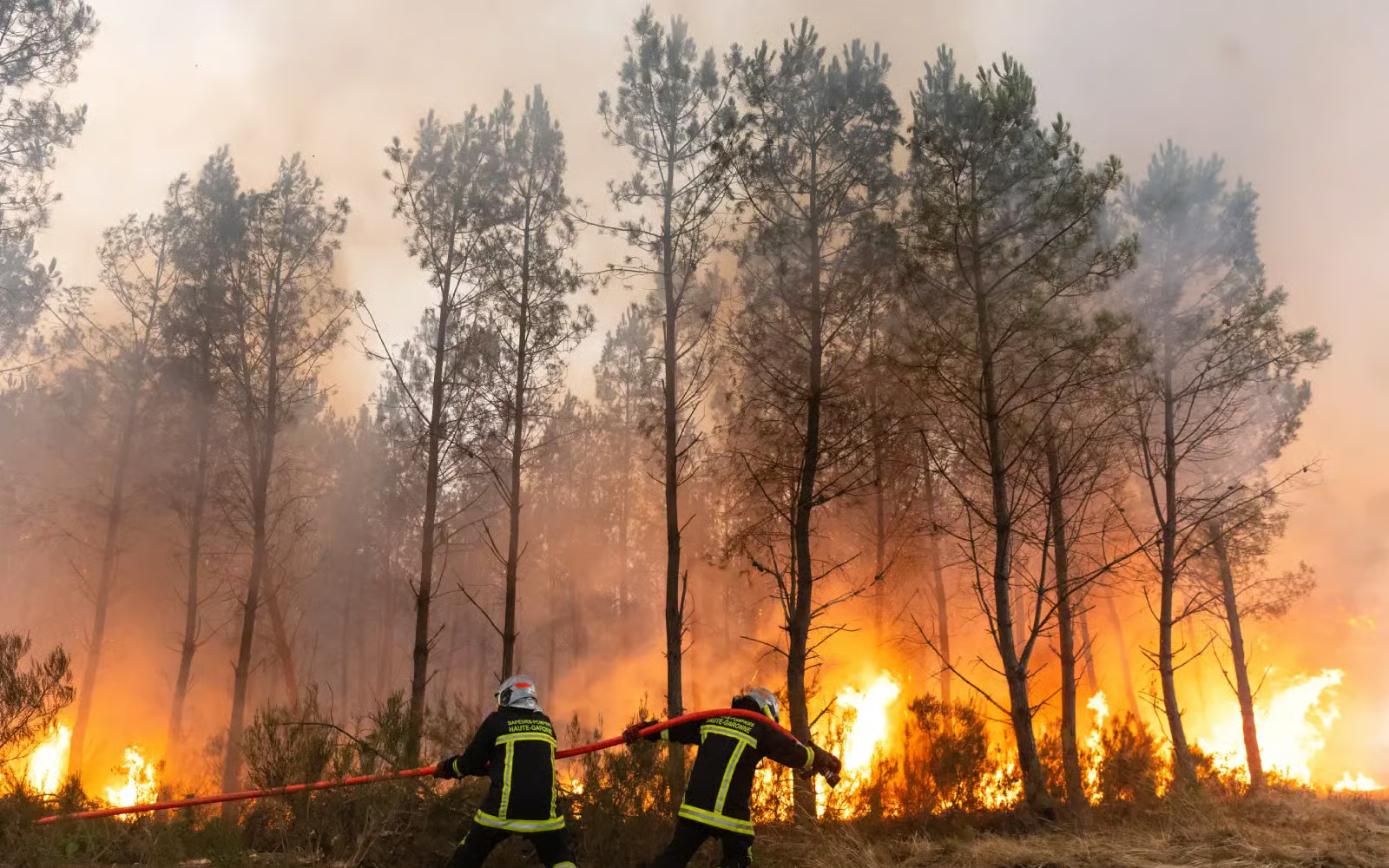
Spain is currently facing a monumental environmental and logistical crisis as ferocious wildfires sweep across the nation. Driven by extreme weather conditions and shifting winds, these blazes have prompted massive emergency responses and high-level political warnings regarding the ongoing global climate crisis.
As part of our commitment at Nabil IT to covering global events and their broader environmental impacts, this comprehensive report breaks down the catastrophic events unfolding across the Iberian Peninsula and beyond.
The Frontlines: Madrid in a Race Against Time
Spanish firefighters are engaged in a critical battle to control severe wildfires raging near Madrid. The situation remains highly volatile, heavily dependent on unpredictable meteorological shifts.
Authorities have identified a crucial window of time before a forecasted southern wind arrives, which carries the severe risk of aggravating the flames. Fran Martin Aguirre, the government delegate in the Madrid region, emphasized that this wind shift could heavily complicate containment efforts, making current firefighting operations absolutely vital. Intehttps://nabil-it.com/wp-content/uploads/2024/12/vintage-electrical-and-electronic-appliances-in-an-2023-11-27-05-10-10-utc-e1734923695564.jpgr Minister Fernando Grande-Marlaska echoed this urgency, declaring the current timeframe “absolutely decisive” as weather forecasts look “truly unfavorable” for the coming days.
The Mega-Fire Threat
The severity of the situation is underscored by the merging of different fire fronts. The “Sierra de l’ouest” fire in the Madrid region is dangerously close to joining the colossal Ávila blaze in the neighboring Castile and León region. The Spanish government has already classified this merging disaster as the “most important” forest fire in Spain’s recent history. Despite a slight deceleration in the fire’s progression overnight, three active fronts remain uncontrolled.
The Scale of Destruction: A Statistical Overview
The sheer volume of scorched earth highlights the unprecedented nature of this disaster. Below is a breakdown of the geographic impact across the region:
| Region / Country | Hectares Destroyed | Key Details & Context |
|---|---|---|
| Spain (National YTD) | > 170,000 hectares | Total burned area across Spain since the beginning of the year. |
| Spain (Recent Outbreaks) | ~ 75,000 hectares | Burned in just a few days; roughly seven times the size of Paris. |
| Gironde (France) | 42,000 hectares | Neighboring France faces similar crises amidst returning heat. |
| Valencia (Spain) | > 7,000 hectares | Resulted in one fatality and directly affected tens of thousands. |
(Note: Neighboring Portugal is also battling multiple new outbreaks in regions including Santarem, Guarda, Braga, and Bragança).
The Human Cost: Evacuations and Economic Ruin
Behind the staggering statistics lies a profound human tragedy. Tens of thousands of residents have been directly affected, and the economic toll on local businesses is absolute.
For many, the fires have meant total financial ruin. María Angeles Cañete, a local business owner who lost two campsites to the flames, described the ordeal as “the worst thing that can happen to you in life: seeing your business go up in flames little by little and no one to help you”.
As some evacuees tentatively begin to return home, they are met with apocalyptic scenes. A 20-year-old decorator, Oscar Espinosa, returned to the village of Cebreros only to find absolute devastation. “It’s a disaster, all our mountains have burned, everything we had that was green is ravaged,” he stated, describing the landscape as “hell”. The air in these areas remains choked with white smoke, causing respiratory irritation, while ash blankets the surviving infrastructure.
“No Longer an Exception”: The Climate Emergency
These historic fires have forced a national reckoning regarding the realities of climate change. During a visit to the rescue coordination center in Valencia, Prime Minister Pedro Sanchez delivered a grim assessment of the situation.
In a speech addressing the need for “climate shelters,” Sanchez declared that these unprecedented fires are “the most painful expression of a climate emergency”. Setting a stark tone for the future of disaster management, he warned: “It is no longer an exception, it is the rule”.
This new reality fundamentally changes how emergency services operate. Pedro Gil, chief of firefighting operations in Castellón, noted that extinguishing these mega-fires is no longer just a matter of human effort. Instead, crews must wait for a “window of opportunity” provided by the weather, such as a significant increase in humidity, to make any real progress.
📦 KEY TAKEAWAYS
- A Historic Crisis: The merging of the Madrid and Ávila fires represents the most significant forest fire in recent Spanish history.
- Massive Devastation: Over 170,000 hectares have burned in Spain this year, with 75,000 hectares destroyed in just a few recent days.
- The Climate Reality: The Spanish Prime Minister has officially framed the scale of these fires as the new normal, directly resulting from the global climate emergency.
- Weather Dependency: Firefighting operations are currently at the mercy of unpredictable winds and require favorable meteorological windows to succeed.
Stay tuned to Nabil IT for further analysis on how global crises intersect with emergency infrastructure and technology.