

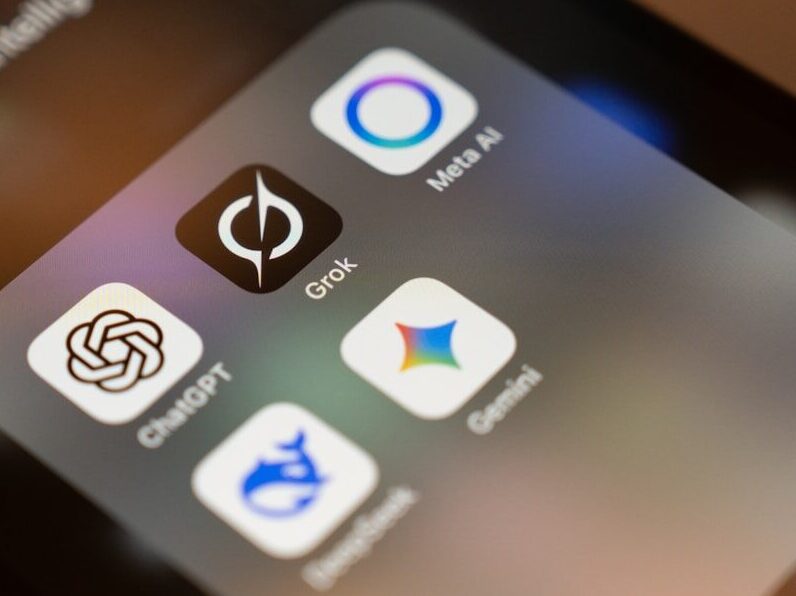
Even by the AI industry’s own frantic standards, the first two weeks of July 2026 stood out. Within about 48 hours of each other, three of the industry’s biggest players pushed out major releases: SpaceXAI launched Grok 4.5, OpenAI unveiled its GPT-5.6 family alongside a new generation of voice models, and the backdrop to all of it was a noticeably different pattern than in years past, frontier releases increasingly shaped by government review, not just competitive pressure. One developer reply on X summed up the mood succinctly: “tomorrow gonna be a busy day for competitors.” Here’s what actually shipped, and what the pattern behind it says about where AI is heading next.
Grok 4.5: A Model Born From a $60 Billion Acquisition
The most structurally interesting release of the week came from SpaceXAI, the merged entity formerly known as xAI. Elon Musk’s AI lab was formally absorbed into SpaceX in February, and in June SpaceX disclosed a roughly $60 billion all-stock deal to acquire Anysphere, the startup behind the popular AI coding tool Cursor. Grok 4.5, released July 8 and opened to the public a day later, is the first visible product of that consolidation: a 1.5-trillion-parameter mixture-of-experts model trained in part on real Cursor developer session data, giving it exposure to how developers actually iterate on problems across files and multi-step tasks, rather than just static code repositories.
Musk pitched the model bluntly on X: “It is an Opus-class model, but faster, more token-efficient and lower cost,” later clarifying that SpaceXAI’s internal assessment puts it “roughly comparable to Opus 4.7, but much faster.” The pricing backs up the cost argument: Grok 4.5 runs $2 per million input tokens and $6 per million output tokens, more than 60% cheaper than Claude’s Opus 4.8 ($5/$25) and undercutting OpenAI’s priciest new model as well. Independent benchmarking placed it fourth on the Artificial Analysis Intelligence Index, ahead of every open-weight model and every current Gemini model, though still trailing the very top tier from OpenAI and Anthropic on raw capability. Notably, Grok 4.5 wasn’t available in the EU at launch, with regional availability expected to follow in mid-July.
The strategic subtext is arguably more significant than the model itself. Grok 4.5 was trained on compute that SpaceXAI also leases to competitors, including Anthropic and Google, which puts the company in the unusual position of deciding how much of its own infrastructure to keep for itself versus renting out. Combined with the Cursor acquisition, SpaceXAI now controls a model lab, a major IDE with direct access to real developer workflows, and a large compute footprint, a vertically integrated stack aimed squarely at the coding and agentic-work market rather than consumer chatbots.
OpenAI’s Answer: Sol, Terra, and Luna
OpenAI’s response landed the very next day. Rather than a single flagship, the company introduced a three-tier GPT-5.6 family: Sol, built for frontier reasoning and long-horizon agentic work, with a new “ultra mode” for faster handling of complex tasks; Terra, a balanced everyday model priced at roughly half of GPT-5.5 while matching its performance; and Luna, the fastest and cheapest of the three at $1 per million input tokens and $6 per million output tokens.
The launch itself had been delayed roughly a month earlier, at the request of the U.S. government, which cited national-security concerns about the potential misuse of increasingly powerful AI systems. That pause ended with a staggered release: business usage of the new models remains free through August 6, after which standard token-based pricing kicks in.
OpenAI also shipped a second, unrelated release the same week: GPT-Live-1 and a smaller GPT-Live-1 mini, full-duplex voice models capable of listening and speaking at the same time rather than waiting for a clearly defined pause, allowing for natural interruptions and more fluid back-and-forth conversation. GPT-Live-1 mini now powers ChatGPT’s default voice mode for free users, with the larger model available to paid subscribers. OpenAI says over 150 million people already use ChatGPT’s voice and dictation features regularly, and executives have described voice as a likely future “primary interface” for complex, longer-running agentic tasks, not just casual conversation. The rollout wasn’t flawless. During a live demo of the model’s translation abilities in Hindi, the assistant reportedly spoke with a noticeably American accent and a stiff, “bookish” tone, a reminder that natural-sounding multilingual voice AI is still a work in progress even at the frontier.
Where Claude Fits In
Anthropic’s most recent flagship release, Claude Sonnet 5, became the default model across all Claude plans on June 30, positioned around long-context reasoning, coding, and tool use, with introductory pricing of $2 per million input tokens and $10 per million output tokens running through the end of August. It’s the model actually answering questions in Claude’s chat interface as of this writing.
Anthropic’s newer, more powerful model tier, Fable 5 and Mythos 5, had a more turbulent path into public use. U.S. export-control authorities temporarily suspended access to both models in mid-June, and Anthropic complied while the matter was reviewed; access was restored on July 1 once the relevant compliance requirements were resolved. It’s become something of a recurring theme this summer: model capability, particularly around advanced coding and vulnerability-discovery ability, is now something governments are actively willing to gate, not just something labs self-regulate. Anthropic’s own statement on the episode is publicly available for anyone wanting the full timeline.
The Rest of the Field
The Grok and GPT-5.6 launches were the headline events, but they landed inside an already crowded release calendar. Google has been pushing Gemini 3.5 Flash as a fast, low-cost option aimed at rapid prototyping and testing rather than raw capability, alongside Nano Banana 2 Lite for quick, inexpensive image generation and Gemini Omni Flash for video and image editing workflows. Meta has been previewing Muse Spark, aimed at creative and multimodal generation tasks, while a video-generation model informally dubbed “Happy Horse 1.0” has been linked in public discussion to Alibaba. On the open-weight side, Kimi K2.7 Code became directly available inside GitHub Copilot, giving cost-conscious development teams a usage-based alternative to the major closed models. SpaceXAI separately rolled out a no-code Voice Agent Builder aimed at businesses, capable of producing a production-ready voice agent in under two minutes, priced at $0.05 per minute of audio plus $0.01 per minute for telephony.
Two Forces Pulling in Opposite Directions
Step back from the individual releases, and this stretch of July tells a story about two forces pulling against each other. On one side is straightforward price competition: Grok 4.5, GPT-5.6 Luna, and Gemini 3.5 Flash are all racing toward the same goal, near-frontier capability at a fraction of the cost of last year’s top models, with token efficiency increasingly marketed as a headline feature rather than a footnote. On the other side is a tightening web of government oversight around the most capable systems specifically, visible in OpenAI’s delayed GPT-5.6 rollout, in Anthropic’s Fable and Mythos suspension, and in reporting suggesting frontier labs may increasingly need to give federal evaluators early access, report on malicious use of their systems, and accept staggered rollouts that phttps://nabil-it.com/wp-content/uploads/2024/12/vintage-electrical-and-electronic-appliances-in-an-2023-11-27-05-10-10-utc-e1734923695564.jpgritize vetted government and critical-infrastructure customers before the general public.
Put simply: the floor of what a cheap, competent AI model can do keeps dropping, while the ceiling, the most capable systems being trained right now, is getting wrapped in more review before the public ever sees it. Both trends are accelerating at the same time, which is part of why weeks like this one feel so disorienting even to people who follow the industry closely.
What This Actually Means If You’re Choosing a Tool
For anyone using these tools for real work rather than tracking the industry as a spectator sport, the practical takeaway is less about which model tops a benchmark chart this week and more about fit. Sol and Grok 4.5 are both explicitly positioned around coding and long-horizon agentic tasks; Terra and Sonnet 5 are built to be reliable daily drivers across a mix of writing, reasoning, and coding work; Luna and Gemini 3.5 Flash exist specifically so teams can run fast, cheap experiments without worrying about token costs. None of that requires picking a single “winner,” and most sehttps://nabil-it.com/wp-content/uploads/2024/12/vintage-electrical-and-electronic-appliances-in-an-2023-11-27-05-10-10-utc-e1734923695564.jpgus teams right now are running two or three models side by side for different jobs rather than betting everything on one lab’s roadmap. Given how quickly this list has already changed in the space of a single week, that’s likely to remain the more durable strategy for a while yet.