

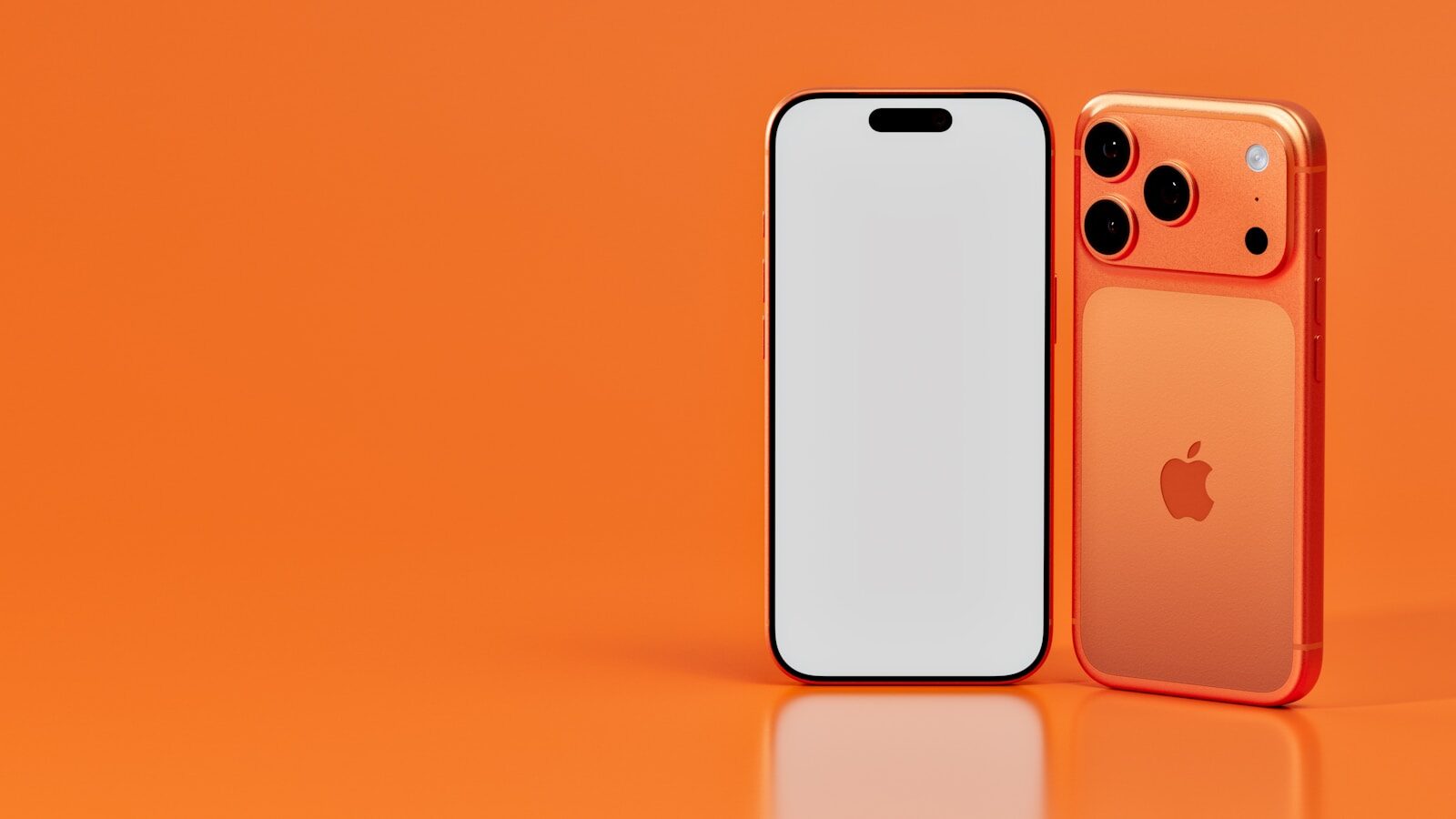
Apple’s release of the iPhone 17 series has completely reshaped our expectations of smartphone product design. The lineup marked the death of the underperforming “Plus” model and introduced a daring, ultra-slim design philosophy in the form of the iPhone 17 Air.
Furthermore, Apple finally addressed long-standing user complaints by pushing flagship-level display features down to the standard model. But after months of real-world testing, how do these devices actually perform?
In this comprehensive, unbiased review, we analyze the entire family—the standard iPhone 17, the experimental iPhone 17 Air, and the absolute beasts, the iPhone 17 Pro and Pro Max—to highlight their key features, hidden compromises, and help you decide where to invest your hard-earned money.
1. The Base iPhone 17: Finally, a No-Compromise Flagship
For years, Apple drew massive criticism for keeping standard iPhone users trapped in a $60\text{Hz}$ screen refresh rate. With the base iPhone 17, Apple has officially leveled the playing field.
[Legacy iPhone Base vs. iPhone 17 Base Screen Specs]
Legacy Model:   60Hz LTPS ──> Jagged Scrolling, No Always-On
iPhone 17 Base: 120Hz LTPO ──> Fluid ProMotion, Dynamic Refresh, Always-On Display
Key Upgrades:
- 120Hz ProMotion is Here: The base model finally gets a buttery-smooth $120\text{Hz}$ LTPO refresh rate. Navigation, scrolling, and gaming are incomparably fluid.
- Larger, Brighter Screen: Apple trimmed the bezel borders, bringing the screen from $6.1\text{ inches}$ up to a gorgeous $6.3\text{ inches}$ without significantly increasing the phone’s physical footprint. Peak brightness now reaches an outstanding $3000\text{ nits}$ in direct sunlight.
- Efficient A19 Silicon: Built on an enhanced $3\text{nm}$ fabrication process, the base A19 chip runs cool, handles intensive generative AI processes effortlessly, and boosts battery life to a solid $20\text{ hours}$ of active mixed-use.
The Drawbacks:
- Lacks Optical Telephoto: You are still limited to a dual-camera layout (Main and Ultrawide). If you want zoom past the digital $2\text{x}$ crop, you will have to upgrade.
- Recycled Back Design: Visually, the rear layout remains almost indistinguishable from the iPhone 16.
2. The iPhone 17 Air: A Beautiful But Compromised Experiment
Measuring an unbelievable $5.5\text{ mm}$ in thickness and weighing only $145\text{ grams}$, the iPhone 17 Air is the thinnest device Apple has ever manufactured. However, extreme engineering requires extreme compromises.
                  5.5mm
               ┌──┐
               │  │ <── Razor-thin aluminum frame
               │  │
               └──┘
Key Upgrades:
- The “Wow” Factor: Holding the iPhone 17 Air feels like holding a piece of heavy cardstock. It is incredibly comfortable, sleek, and easily slips into tight pockets.
- Expansive Display: It features a highly responsive $6.6\text{ inches}$ display, providing a spacious canvas for users who love big screens but hate heavy bricks.
- Premium Powerhouse: It packs the A19 Pro chip, giving it massive computational headroom to run complex local Apple Intelligence tasks.
The Drawbacks:
- Single Camera Limitations: To achieve a $5.5\text{ mm}$ chassis, Apple had to eliminate the camera bump. The Air houses only a single $48\text{MP}$ rear sensor. You completely lose ultrawide capabilities, macro photography, and physical optical zoom.
- Lighter Battery Capacity: Because of its razor-thin profile, the physical battery capacity is noticeably smaller than its siblings. It relies heavily on aggressive software optimizations to get you through a standard workday.
- Slower Wired Transfer: USB-C speeds on the Air are capped at legacy USB 2.0 standards, and it lacks external video-out capabilities.
3. iPhone 17 Pro & Pro Max: The Unrivaled Powerhouses
For power users, mobile filmmakers, and hardcore mobile gamers, the Pro series represents Apple’s engineering peak, particularly because it resolves the thermal throttling issues that plagued previous titanium generations.
Key Upgrades:
- Vapour Chamber Cooling: Apple finally implemented a dedicated Vapour Chamber (VC) cooling system in both the Pro and Pro Max models. This allows heat to dissipate much faster, keeping the A19 Pro chip running at peak performance during heavy 3D gaming or 4K rendering.
- 12GB RAM Standard: To fully support next-generation, local multimodal AI models without lagging, Apple bumped the RAM up to $12\text{GB}$.
- Next-Gen Triple 48MP Cameras: The Pro Max features three native $48\text{MP}$ lenses (Wide, Ultrawide, and a $5\text{x}$ Periscope Telephoto). Detail retention across high-crop zoom images is phenomenal.
- Upgraded 24MP Front Camera: Selfies and video calls are crisp, sporting a higher-resolution sensor that handles low-light environments far better.
The Drawbacks:
- Heavy Weight: The Pro Max remains a heavy device to hold for prolonged pehttps://nabil-it.com/wp-content/uploads/2024/12/vintage-electrical-and-electronic-appliances-in-an-2023-11-27-05-10-10-utc-e1734923695564.jpgds, weighing over $220\text{ grams}$.
- Prohibitive Pricing: With premium configurations, the price can easily stretch past normal consumer budgets, making it a professional-only investment.
Pros and Cons: A Complete Comparison
Standard iPhone 17
- Pros: $120\text{Hz}$ LTPO screen, incredible battery efficiency, standard pricing.
- Cons: Dual-camera setup only, slow USB 2.0 speeds.
iPhone 17 Air
- Pros: Mind-blowing ultra-thin design ($5.5\text{ mm}$), lightweight, large $6.6\text{ inches}$ display.
- Cons: Single rear camera lens, shorter battery lifespan, expensive premium for aesthetics.
iPhone 17 Pro & Pro Max
- Pros: Vapour chamber cooling (no overheating), $12\text{GB}$ RAM, elite triple $48\text{MP}$ camera array with $5\text{x}$ zoom.
- Cons: Heavy footprint, very expensive, titanium alloy is prone to micro-abrasions if not cased.
Final Verdict: Which iPhone 17 is Right for You?
Choosing the right iPhone in 2026 comes down to how you phttps://nabil-it.com/wp-content/uploads/2024/12/vintage-electrical-and-electronic-appliances-in-an-2023-11-27-05-10-10-utc-e1734923695564.jpgritize budget, style, or raw performance:
- The Smart Buy (iPhone 17 Base): If you want the absolute best value for your money, buy the base iPhone 17. The addition of the $120\text{Hz}$ ProMotion screen makes it feel like a Pro model, making the price gap between the base and Pro harder to justify for casual users.
- The Style Statement (iPhone 17 Air): Only buy the Air if you phttps://nabil-it.com/wp-content/uploads/2024/12/vintage-electrical-and-electronic-appliances-in-an-2023-11-27-05-10-10-utc-e1734923695564.jpgritize design comfort and minimalism over utility. It is a stunning conversation piece, but you must be comfortable living with a single camera lens.
- The Uncompromised Powerhouse (iPhone 17 Pro Max): If you are a mobile creator, gamer, or want a future-proof phone that will easily last the next $5$ years, go for the Pro Max. The combination of $12\text{GB}$ RAM, advanced vapour cooling, and the incredible $5\text{x}$ optical telephoto camera makes it an absolute productivity beast.
Which device in the iPhone 17 lineup fits your personal style? Are you willing to give up extra cameras for the razor-thin design of the Air? Let us know in the comments below!